Introducing Halogen TV

halogen-orange

halogen-orangeOver the past two years, I’ve had the privilege and opportunity to be part of a team that is building a television network from the ground up. No this isn’t a one show. No this isn’t a local station. It’s a full-fledged television network, distributed across the country in over 12+ million homes (and growing). Coming this Friday, October 24, 2009, we flip the switch and it goes live.

Introducing Halogen: A socially conscious, empowering entertainment network.

The network targets the 18-49 demographic and will consist of over 560 hours of original and licensed comedies, dramas, reality shows and documentaries.

If you’re tired of watching the same ol’, I’d encourage you to head over here and see if Halogen is in your area.

Be looking out for the re-launch of the HalogenTV.com website this week. We are feverishly working to get it ready for you. You’ll be able to watch some of our content online as well as peruse the schedule and summaries for each of the shows. I’m also excited to let you know that starting in January 2010, we will be broadcasting in HD.

I encourage you to check out www.HalogenTV.com for more information. If you like what you see, I’d love it if you’d help us spread the word. Here are some quick links so you an follow us online:

Don’t just take pictures, give them

helpportrait

In August of this year, I sat down with Jeremy Cowart, a well-known and respect photographer, and we shared a meal while he told me about this idea he had. He wanted to rally photographers across Nashville, and maybe even the US, to come together on 12/12/09 and give portraits to people who were unable to afford it. His idea was called Help Portrait and his slogan was, “Give pictures, don’t take them.” Immediately, I was drawn to the idea and volunteered to help.

Help-Portrait-Logo-lowres

In late-August, the Help Portrait website was launched in conjunction with this video:

Today, just 44 days since we launched the concept, here’s what’s happened:

  • well over 30,000 views of the video
  • 35,277 unique visitors to the www.help-portrait.com website
  • 3145 people have signed up to learn more
  • 3312 Twitter followers
  • 3456 Facebook “fans”
  • 1318 people have signed up to participate
  • 217 locations around the world and at last count over 30 countries

WOW! Who knew that this simple idea would turn into a worldwide event?!?

Today, I had the pleasure of joining 15 photographers and a makeup artist to do a trial run at the Nashville Rescue Mission. helpportraitTo put it simply, today was amazing. We saw and heard stories that I’m sure we’ll never forget.

One lady, after getting hair and makeup done, stood in front of the camera and started crying. She said, “I’ve just never felt special before.”

A 53 year-old man stood in front of the camera, noticably excited. When asked, he said it was the first time he’d ever had his picture taken. EVER.

One guy must have had a hundred pictures taken of him. Clearly, this was a gift to him. He couldn’t get enough of it.

And on a different note, when I walked around and asked onlookers if they wanted their picture taken, one guy said, “What would I do with it? I don’t have anybody to give it to.” Another said, “I haven’t had my picture taken since going into the military in 1971.” When I encouraged him to have it taken anyway, he simply said he wasn’t interested. I wondered why?

What I learned today is that Help Portrait, something a handful of us have been trying to organize for 44 short days, isn’t an idea, or a movement, or about taking pictures. It’s about telling people that they matter. Lee Ann Dichtel, our liason for the Mission said it best when she said, “You have no idea what you’re doing for these people. Most of the time, when people see them walking on the road, they turn around and go the other direction. So to give them the opportunity to look them in the face and show them how beautiful they are, means a lot.”

Again, wow!

I’m honored to play the role that I’ve been graciously given in the Help Portrait story. I can’t wait to see what happens on 12/12/09.

Potential versus Performance

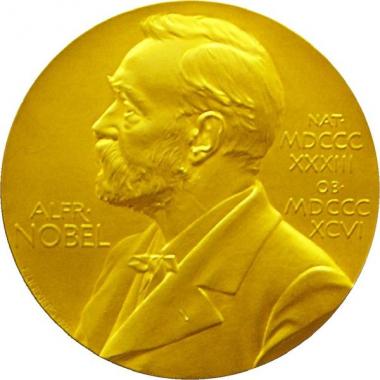
noble peace prize

noble peace prizeToday, President Obama won the 2009 Nobel Peace Prize. Hmm. Award nominations closed on February 1, 2009, only weeks after he was sworn into office. How in the world does this happen?

Nobel Committee chairman Thorbjoern Jagland stated that “He got the prize because he has been able to change the international climate.” Wow, so in two weeks, Obama was able to change the entire international climate? I hardly think so.

While this accolade is turning out to have mixed feelings from everyone—just type in “obama nobel peace prize joke” into any search engine—what’s even more disturbing is the trend in our culture to reward people for potential, not performance.

Michael Jordan and Charles Barkley talked about this same issue on Oprah a couple of years ago, in regards to the NBA. Check out this 1:23 clip (YouTube)

What’s most disturbing about this is not that NBA, NFL and now political players are being rewarded based on potential, but that it’s molding our psyche’s to value and expect the same for us. This is an infection that will know no limitations.

Yesterday, I was talking to a good friend about the traits versus the character of leadership. Traits are things that we can mimmick. Character is molded by experience.

Perhaps the parrallels are the same?

Oprah asked Michael Jordan if part of the reason why LeBron and others get these massive deals based on potential are because of his, and others, successes. Of course they are. Michael Jordan showed us what skill and talent look like and when others come a long that are able to exhibit those same traits, they are immediately rewarded as if they can execute at the same level.

During a recent Sunday Night Football game, the announcers were talking about Brett Favre’s success. They stated that when he first started in the NFL he would throw 3000-5000 passes a day. Today, he only has to throw 50-60.

In a previous post, I talked about the 10,000 hour theory; that you can’t become a master of anything until you’ve invested at least 10,000 hours into practicing your skill.

Truth of the matter is this, while people may possess the traits of leadership, skill or experience, until they have invested a significant amount of time into practicing it, rewarding people based on potential does more damage than good.

Oprah asks Michael Jordan if paying kids based off of potential was bad and Jordan responded by saying “…it sets [a] bad work ethic. When you get something so easily, you’re not going to work as hard.”

I couldn’t agree more.

So, Mr. President, congratulations on accepting an award based on your potential. I only hope that you can live up to your own hype.

Finally, a Guide to Understanding Women

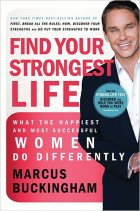
Findyourstrongestlife

Find Your Strongest Life

Today marks the day that the book, Find Your Strongest Life: What the Happiest and Most Successful Women do Differently ($19.79 @ Amazon.com) by Marcus Buckingham, author of Now, Discover Your Strengths ($19.80 @ Amazon.com), releases.

You might wonder why I, a man, am talking about this book? Truth is, women are everywhere: I’m married to one, I have a daughter, a sister, a mom, and I work with lots of women through my business. So it seems sensible that I would take intentional steps to understand women (if that can really be done—I kid. I kid). Perhaps it would make both of our lives a tad-bit easier?

While I’m in the midst of reading and processing this book, I came across some interesting facts and information about women that counter common assumptions. The book digs into these assumptions in great detail, but for blogging purposes, I thought I’d give you a sneak peak of the potential that this book has for you—men and women.

Common, but incorrect assumptions

Assumption (A): As a result of better education, better jobs, and better pay, women today are happier and more fulfilled than they were forty years ago.
Fact (F): Not true. Women are less happy

A: At work, women are relegated to lower-level roles
F: Not true. 37% of women hold managerial or supervisory positions as compared to 31% of men

A: Having children makes women happier
F: Not necessarily. Based on studies, married mothers are always more stressed and less happy than married women with no kids.

A: If women had more free time, they would feel less stressed
F: Not true. Based on studies, each extra hour of free time doubles a man’s feelings of relaxation, but does nothing for a woman’s. Maybe that’s why men watch HOURS of sports?

A: Kids want more time with their working mothers
F: Not according to the kids. They prefer their moms to be less stressed and tired

There are many more assumptions that the book dives into, but as you can see, this book isn’t just about and for women, we all could benefit from reading it.

Finally, this wouldn’t be a Marcus Buckingham book if there wasn’t an opportunity to personalize the content. Included with the book is a “Strong Life Test” which gives the reader the opportunity to “discover the role you were born to play.” If you want to jump ahead of the content and take the test, head over to the Strong Life Test website and take the test, for free.

I’m really looking forward to reading this book and would like to recommend that men, especially, consider this book for your reading list. The progressive assumption of gender and roles needs to be re-evaluated, desperately. According to the book, women are less happy than ever. I believe that men should play a complimentary role in helping women find their strongest life.

###

Want free books from Thomas Nelson? Sign up to become a book review blogger.

It’s time to take off the training wheels

Remember the day that you took the training wheels off your bike, only to swerve down the path a couple of feet and meet your best friend, the pavement?

Remember when you started playing that video game Contra? You couldn’t put it down because you just had to conquer the game. Up-up-down-down-left-right-B-A-start.

Remember when you were in school and you had to write that paper for creative writing? As you turned it in for review and grading, you wondered if it was your best, or worst work to-date.

Remember when your friend stabbed you in the back, but you chose to accept their apology and keep being friends—over and over, and over and over?

The days of our youth were filled with trial and error. We were unafraid and failure was rarely final.

What would your childhood look like if we were afraid of making mistakes and failure was final?

You’d never learn to ride a bike. After a few falls, you’d quit and walk away—hoping that nobody saw you fall.

You’d stop playing the video game after a few tries and chaulk it up to gaming just not being your thing. Or perhaps, it’s just a stupid game.

You wouldn’t know how to express yourself in writing, and in fact, you may not even know how to type. After all, why would you keep trying to write if your teachers never liked your work? It must be them, right?

You wouldn’t have friends because you would automatically assume that they didn’t want to be your friend.

The point is this, we can’t imagine not being able to ride a bike, never conquering a game, not being able to look in your trunk of memories to find that story you wrote about becoming an astronaut, or ever having a friend to call when you needed them, or when you don’t. At the root of our childhood is risk. It’s how we explored and learned everything we know today. But, something happens when we get older. We think we know, that we have things figured out and perhaps the pain of trying isn’t worth the reward any longer. If that’s you, may I ask one question?

When you’re 65, what won’t you have then because you were afraid to take the risk today? Sure, the stakes are higher, but so are the rewards.

Three Quick Steps to a Zero Inbox

zeroinbox-bg

Tired of wondering if you’re missing something in your email inbox? Believe it or not, that feeling weighs on your subconscious more than you know. Rather than live with anxiety, let’s process those emails and get you to a zero inbox. Yes, that’s right, zero. Absolutely not one email will remain. Is it possible? Yes! In fact, it’s possible to keep a zero inbox which means guilt, worry and stress-free email maintenance. Ready? Here are three quick steps to implementing a zero inbox:

1) Create a four new folders:

  • @Action – Used to put emails that require a timely response
  • @Someday – Used to put emails that require your attention, but timing is not an issue
  • @Follow Up – You put emails here that you’ve replied to, but it requires that you follow up with someone about the status of the email
  • Archive – This is where all of your processed email will reside. When it’s here, you’re done.

2) Survey your inbox and look for emails that you know require a response. Don’t forget to separate them into what kind of response is required. Drag those into your @Action, @Someday or @Follow-up folders so you can process them later.

3) All emails that remain, select all and move them to your Archive folder.

Now, if you have a lot of emails in your inbox, this is sure to bring a certain level of anxiety—of which will probably make you second guess if you can really do this. You can. If you need to recall a particular email, that’s what your email programs search function is for. Get to know it because it will be your friend.

If you’re one of those people who has a 100 different folders—one for each client, project, person, idea, thought, receipt, etc., I highly recommend that you rid of them all and focus your efforts on using the Archive folder. Why? What makes this system work is your ability to trust your own system. If you can’t remember what folder it’s in, then how will you find it? Sure, you can use your email search function, but then why have the extra folders to comb through? Throw all processed email into your Archive folder and be done with it. Trust me on this one. It’s theraputic.

Now that you have cleaned out your inbox, take a moment to enjoy the mental relief. Go on. Sit back. Take a screenshot and TwitPic it to your friends, family even your mom would love to see what you accomplished.

The beauty of this system is that you know exactly where the emails are that require your response and when so your worry of missing an email are gone. You will be amazed at how much mental energy will be freed up because of zero-inbox.

Before I go, here are some keys to remember:

  • Your inbox is a place to process and sort email. It’s not where you store it.
  • When an email comes in, if you can reply in under two minutes, do it immediately. If not, sort it.
  • Empty your inbox every day. Yes, that means that when you shut down for the day, your inbox is empty.
  • Set aside one day a week to go through your @Someday and @Follow Up folders to make sure out-dated items aren’t piling up. In doing this, you’ll be surprised at how on top of things you’ll feel.
  • DON’T GIVE UP! Even if you get behind, spend an hour and process your inbox accordingly.

Bonus: If you keep email open all day long, that’s what you’ll do all day long. In my experience, when you process offline, you stop the leak of new emails which gives you the time to focus on the emails sitting in your @Action and @Someday folders.

So, do you think you can do it? If you already live zero-inbox, what tips can you offer?

If you like this, you’ll loveThree Quick Steps to Eliminating To-do List Anxiety